Department of molecular and cellular healthspan
Professor
Shimpei Kawamoto
Ph.D.
Basic healthspan research division
Department of molecular and cellular healthspan

Research Areas
Aging biology, Immunology, Microbiology, Cell biology
Research Interests
Microbiome, Cellular senescence, Chronic inflammation
Research Topics
Elucidation of aging mechanisms through the interaction between the commensal microbiota and the immune system.
Professional Memberships
- Japanese Society for Immunology
- The Japanese Society of Clinical Immunology
- The Japanese Cancer Association
- The Japanese Biochemical Society
Research Overview
Unlocking the Mechanisms of Aging through the Microbiome-Immunity Axis
Our laboratory investigates the profound impact of the microbiome on the aging process, mediated through the immune system. We conduct multi-faceted analyses of how microbial shifts in key symbiotic sites—the gut, oral cavity, and skin—influence host homeostasis and age-related functional decline. By elucidating the mechanisms of microbiome-driven aging control, we aim to contribute to the development of novel interventions for extending healthy life expectancy.
1. Gut Microbiome: The Central Regulator of Systemic Aging
The gut microbiome plays a pivotal role in maintaining the host’s immune balance. Our research focuses on how age-associated dysbiosis (microbial imbalance) accelerates not only immune but systemic aging. We are working to uncover the molecular mechanisms by which immune alterations originating from the gut—the "inflammaging" process—drive the aging of the entire body.
2. Oral Microbiome: Linking Aging to Systemic Pathologies
The oral cavity hosts a diverse microbial community, and recent evidence suggests that periodontal pathogens are linked to systemic conditions such as cancer and dementia. We have been clarifying the process by which immune aging leads to the deterioration of the oral environment. Our research delves into the molecular mechanisms by which oral microbiome-immune interactions contribute to age-related diseases and tissue aging.
3. Skin Microbiome: A Model for Tissue Aging
Skin is a unique organ where the physical signs of aging are highly visible. We have identified that the skin microbiome potentially influences aging processes through both direct and indirect pathways. By utilizing the skin as a model for tissue aging, we are identifying the molecular mechanisms by which symbiotic bacteria induce structural and functional decline via immune responses and cellular senescence.
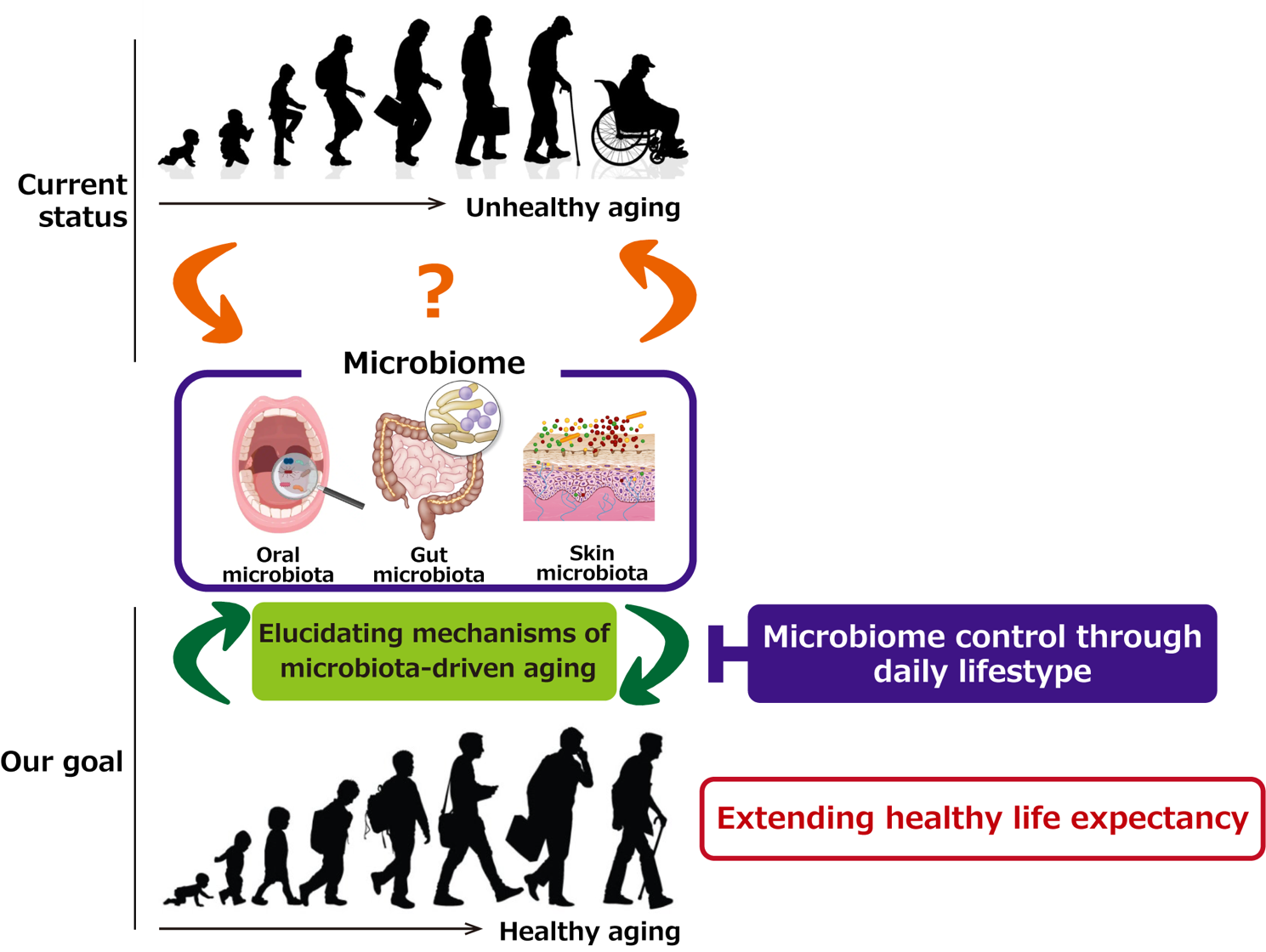
Our ultimate goal: extending healthy life expectancy through microbiome control
Selected Publications:
- Mizuho H, † Kawamoto S, Uemura K, Park JH, Hori N, Okumura Y, Konishi Y, † Hara E. B cell senescence promotes age-related changes in oral microbiota. Aging Cell, 2024;23(12): e14304. († corresponding author)
- † Kawamoto S, Hara E. Crosstalk between gut microbiota and cellular senescence: a vicious cycle leading to aging gut. Trends Cell Biol. 2024;34(8):626-635. († corresponding author)
- Matsudaira T, Nakano S, Konishi Y, Kawamoto S, Uemura K, Kondo T, Sakurai K, Ozawa T, Hikida T, Komine O, Yamanaka K, Fujita Y, Yamashita T, Matsumoto T, Hara E. Cellular senescence in white matter microglia is induced during ageing in mice and exacerbates the neuroinflammatory phenotype. Commun. Biol. 2023;6:665.
- † Kawamoto S, Uemura K, Hori N, Takayasu L, Konishi Y, Katoh K, Matsumoto T, Suzuki M, Sakai Y, Matsudaira T, Adachi T, Ohtani N, Standley DM, Suda W, Fukuda S, † Hara E. Bacterial induction of B cell senescence promotes age-related changes in the gut microbiota. Nat. Cell Biol. 2023;25(6):865-876. († corresponding author)